
Visceral Manipulation
A whole-body approach to comfort and mobility
Your organs are part of your moving body. As you breathe, bend, reach, and turn, the tissues within your chest and abdomen move too.
At Avalon Wellness & Performance, we incorporate visceral manipulation into osteopathic manual therapy to address tension in and around the organs and their connective tissue attachments. Our treatment goals include greater comfort, easier movement, and improved coordination between the abdomen, rib cage, spine, and pelvis.

What is visceral manipulation?
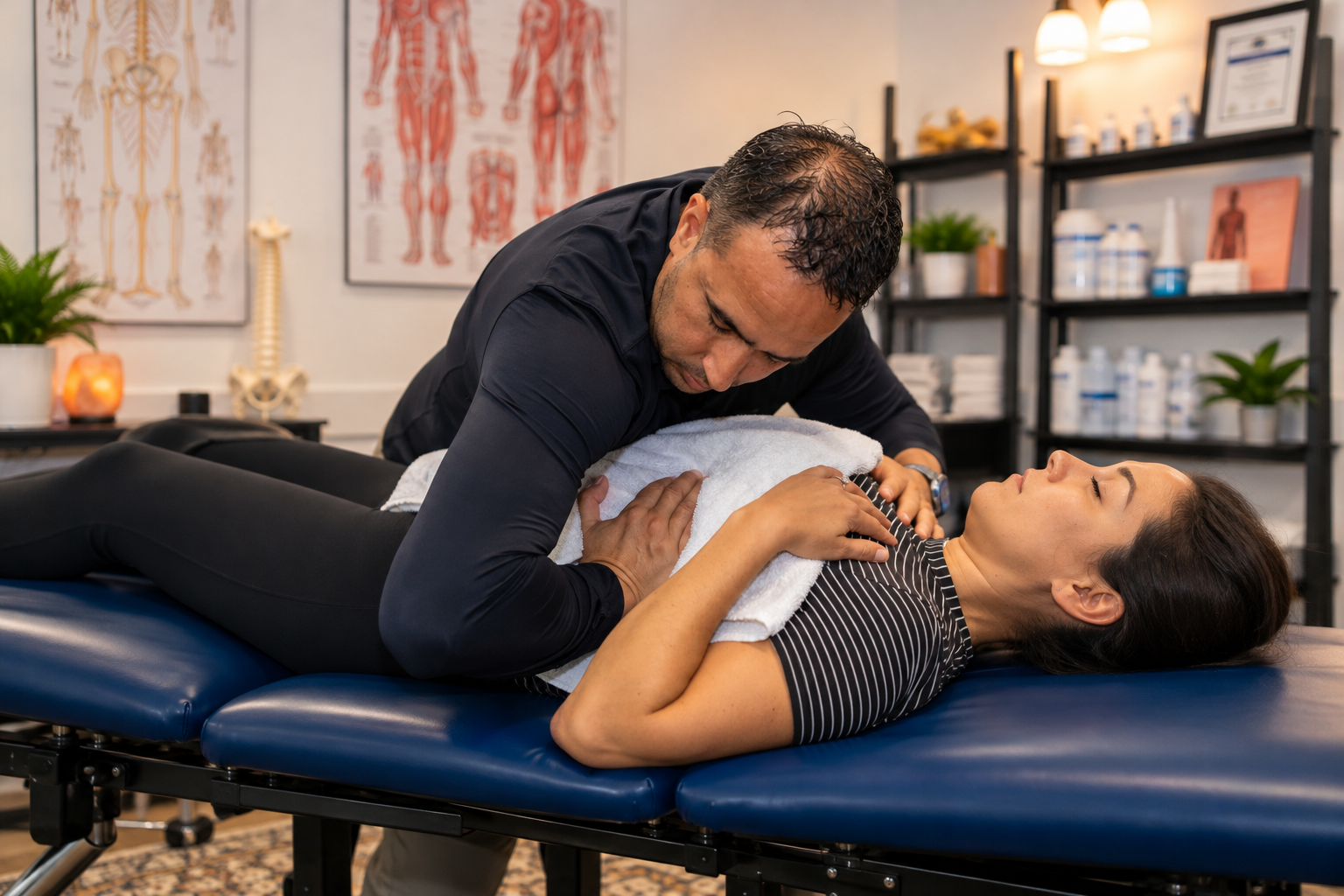
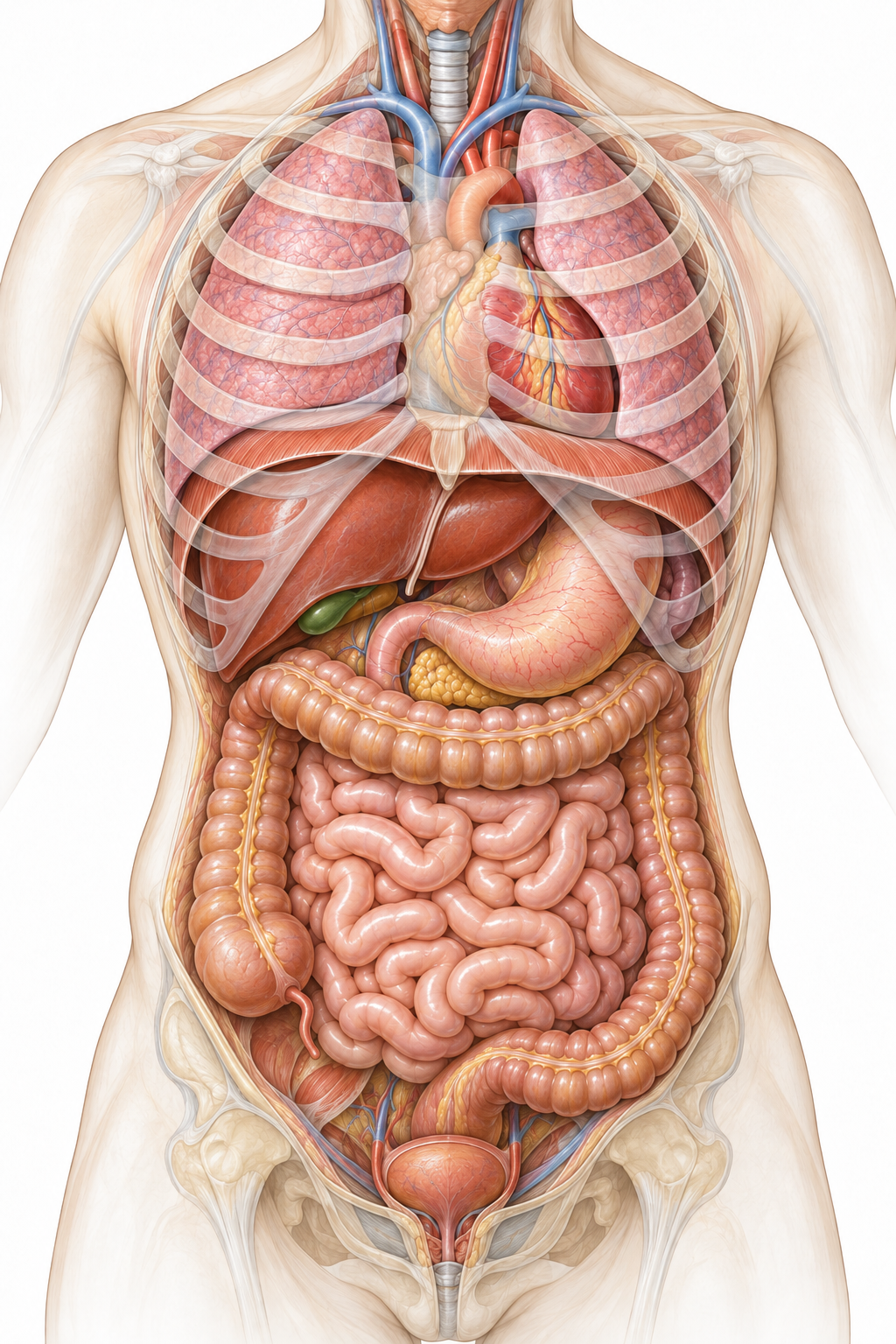
Visceral manipulation is a hands-on therapeutic technique that focuses on the internal organs—the “viscera”—and their surrounding fascia, membranes, and supporting attachments. It is also called visceral mobilization.
Using precise manual contact, a practitioner assesses tissue tension and relative movement, then applies gentle mobilization appropriate to the area being treated.
The approach is closely associated with French osteopath Jean-Pierre Barral, whose work with Pierre Mercier is described in the textbook Visceral Manipulation. The Barral Institute provides education in this approach internationally.
The fascial connection: how organs are supported
Fascia is connective tissue that forms a continuous network throughout the body. It surrounds and connects muscles and other structures, including the tissues supporting our internal organs.
Each organ has a distinctive arrangement of connective tissue coverings and attachments. These may include fibrous capsules, surrounding fascia, and smooth membranes that allow neighboring surfaces to glide. Together, they support the organs while accommodating movement.
In the abdomen, the peritoneum lines the abdominal cavity and covers many organ surfaces. Folds of this membrane, including the mesentery, support parts of the intestines and carry blood vessels, nerves, and lymphatics.
These tissues connect the organs with their surroundings. This is why visceral work has a fascial component: treatment considers the organ together with the tissues supporting it and linking it to nearby structures.
Read more about the anatomy of the peritoneum and mesentery.
Why movement matters
The organs occupy a body that is constantly changing shape and position. Breathing changes the relationship between the diaphragm, ribs, and abdominal contents; everyday movement changes the position of the trunk.
In visceral osteopathic practice, mobility describes how an organ moves in relation to neighboring tissues. Assessment considers these relationships alongside the movement of the abdominal wall, spine, and pelvis.
The therapeutic intention is to reduce restrictive tension and encourage ease of movement within this connected system. At Avalon, we translate that intention into practical goals: a more comfortable turn, an easier reach, or less pulling during everyday activities.
How visceral manipulation is applied
Treatment uses slow, carefully directed contact. Your practitioner adjusts the depth, direction, and duration of each technique according to the tissue response, the treatment area, and your comfort.
Techniques may be performed directly on the skin or over clothing. We explain the contact being proposed and use appropriate draping whenever skin contact is needed.
Depending on your assessment, work may involve the abdomen, lower ribs, diaphragm region, or related connective tissues. Gentle mobilization can be combined with breathing or small changes in position.
The goal is to ease tension and support tissue mobility. Treatment is individualized, and your feedback helps guide the session.
Grounded in osteopathic manual therapy
Visceral manipulation forms part of the osteopathic manual therapy traditions practiced in Canada and Europe.
Our approach reflects four central osteopathic principles:
The body functions as a whole. We consider connections among the organs, fascia, muscles, joints, and other systems.
Structure and function influence one another. Tissue relationships and movement are considered together.
The body has capacities for regulation and recovery. Treatment aims to support adaptation and more comfortable function.
Care is tailored to the individual. Your history, assessment, preferences, and goals shape the plan.
European teaching resources include visceral osteopathy education at UCO, now part of Health Sciences University. The Association of Manual Osteopaths of Canada also describes visceral manipulation within the broader practice of manual osteopathy.
What can visceral manipulation help with?
We use visceral techniques as part of care directed toward comfort and mobility. Depending on your assessment, treatment goals may include:
Easing a feeling of pulling around a healed abdominal scar.
Addressing abdominal or lower-rib soft tissue tension.
Improving comfort with bending, reaching, or rotation.
Supporting trunk mobility alongside care for persistent back discomfort.
Helping you move more comfortably following a period of recovery, once treatment is appropriate.
People also seek visceral care when digestive or pelvic symptoms accompany musculoskeletal tension. We consider the surrounding soft tissues as part of a broader assessment and coordinate with medical or pelvic health providers when appropriate.
The choice of technique depends on your presentation. Your plan may combine visceral mobilization with fascial release, other manual techniques, movement, and breathing practice.
When can visceral manipulation be especially useful?
Visceral work can be a useful part of an individualized plan when tension around the organs accompanies discomfort or restricted movement. Three situations we consider in practice are recovery after surgery, movement adaptations associated with scoliosis, and residual tension following abdominal inflammation.
After abdominal or pelvic surgery
During some operations, organs and surrounding tissues are moved or handled to allow access to the surgical area. Healing can also change how tissues glide, and some people experience pulling around a scar or a sense of restriction with reaching, standing upright, or turning.
Once healing is sufficient and any necessary surgical clearance is in place, gentle visceral and fascial techniques may help ease this pulling and improve movement comfort. We consider the healed scar, abdominal wall, and surrounding tissue relationships together. Treatment is adapted to the procedure and stage of recovery.
Learn about the Barral approach to post-surgical concerns.
Alongside care for scoliosis
Scoliosis involves a three-dimensional change in the spine and trunk. Changes in the relationships among the rib cage, spine, and pelvis also affect the space occupied by the organs and their supporting tissues.
As part of osteopathic care, we assess the abdomen, diaphragm region, and visceral fascial attachments alongside muscles and joints. Visceral techniques may be included to address accompanying soft tissue tension and support more comfortable trunk movement. The focus is comfort and mobility within the person's individual anatomy.
Explore the Barral Institute's information on scoliosis.
After abdominal inflammation has settled
People with a history of abdominal inflammation may experience lingering tenderness, protective muscle tension, or discomfort with movement. Once the condition is medically stable, an assessment can help determine whether gentle work with the surrounding tissues is appropriate.
Here, treatment focuses on residual tension and movement comfort alongside ongoing medical care. Direct visceral treatment is deferred during active abdominal inflammation, infection, or an acute flare. The timing and choice of technique depend on the diagnosis, current symptoms, and guidance from the treating medical team.
Read an overview of visceral manipulation, including treatment timing and precautions.
What to expect during your appointment
We begin by listening. We discuss your symptoms, previous injuries or surgeries, medical history, and the activities you would like to do more comfortably.
We assess movement and tissue relationships. Your practitioner may observe how you breathe and move, then use gentle palpation to assess relevant areas.
We explain your treatment. You will know where we propose to work and whether contact will be over clothing or directly on the skin. Your consent and comfort guide care throughout.
We reassess together. We check how treatment affects your comfort and movement and discuss useful steps between visits.
Frequently asked questions
Is this an abdominal massage?
There may be overlap in the areas treated. Visceral manipulation places particular emphasis on the connective tissue relationships and attachments around the organs, using specific contacts guided by assessment.
What does it feel like?
You may feel light pressure, a gentle stretch, or a slow mobilization. The amount of pressure varies with the technique and your comfort. Tell us about tenderness or discomfort so we can adjust.
Do I need to remove my clothing?
Many techniques can be performed over comfortable clothing. Others may involve direct skin contact. Your practitioner will explain what is appropriate, obtain your consent, and provide draping as needed.
Can you work around a surgical scar?
Once healing allows and any necessary medical clearance is in place, treatment may address the scar and surrounding tissues with the goal of improving comfort and mobility.
How many sessions will I need?
Frequency depends on your concerns, goals, and response. We reassess progress and adapt your plan rather than using the same schedule for everyone.
What should I share before treatment?
Tell us about surgery, pregnancy, hernias, current medical conditions, and medications, including blood thinners. New or unexplained abdominal or pelvic symptoms should be medically assessed before treatment.
Visceral manipulation at Avalon Wellness & Performance
We take time to understand your experience and explain how each technique fits into your care. Whether your goal is more comfortable daily movement, less pulling around a healed scar, or a broader approach to persistent tension, your treatment begins with an individual assessment.
Avalon Wellness & Performance — North Naples, Florida
Manual therapy with a whole-body approach.
Book an Initial Assessment
Further reading
The Barral Institute — information about Barral manual therapies and education.
Barral Institute: Visceral Manipulation — the Institute’s explanation of its therapeutic approach.
Barral Institute: Articles, Research & Case Studies — a collection of professional reading.
Visceral Manipulation, by Jean-Pierre Barral and Pierre Mercier — foundational textbook.
Visceral Manipulation II, by Jean-Pierre Barral — further clinical concepts and techniques.
Health Sciences University / UCO: Visceral osteopathy education.
Association of Manual Osteopaths of Canada: Manual osteopathy.
Villalta Santos et al.: Clinical study of visceral manipulation with physiotherapy.