

Fascial Therapy & Myofascial Release in Naples, FL
Restoring Mobility, Reducing Tension & Supporting Whole-Body Balance
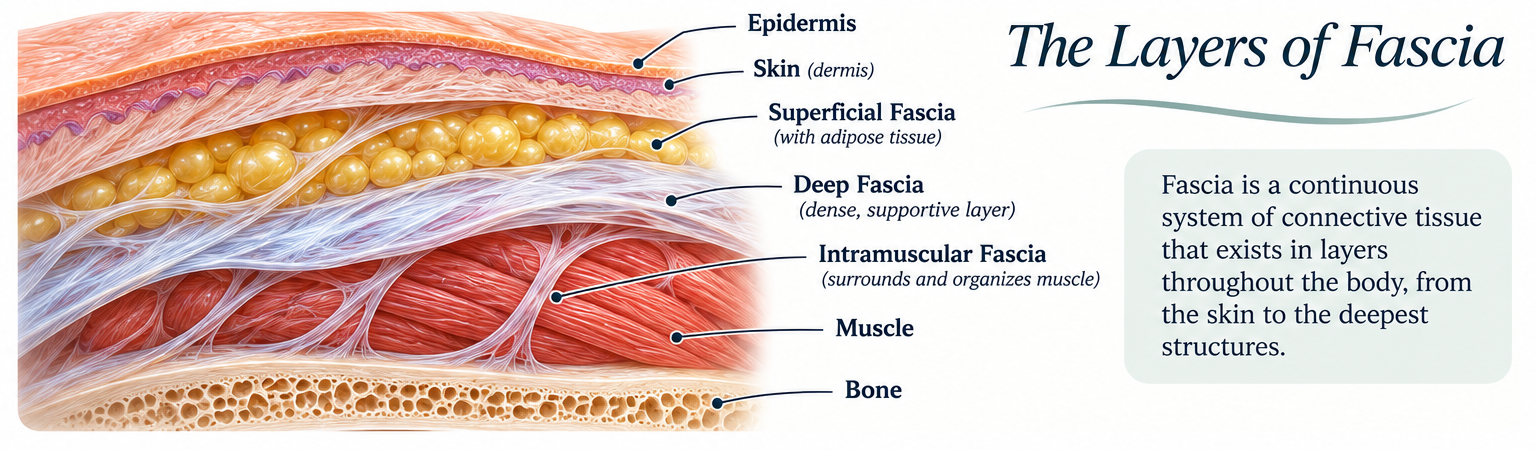
Our bodies are interconnected through an intricate network of connective tissue known as fascia. This tissue surrounds and supports our muscles, bones, nerves, blood vessels, and internal organs, helping different structures move and function together.
When fascia becomes stiff, sensitive, or restricted in its ability to glide, it can contribute to discomfort, limited mobility, and altered movement patterns.
At Avalon Wellness & Performance, fascial therapy is an integral part of our approach to Osteopathic Manual Therapy. Through skilled hands-on assessment and treatment, we work to improve tissue mobility, reduce unnecessary tension, and restore more comfortable, efficient movement.
What Is Fascia?
Fascia is a three-dimensional network of connective tissue found throughout the entire body.
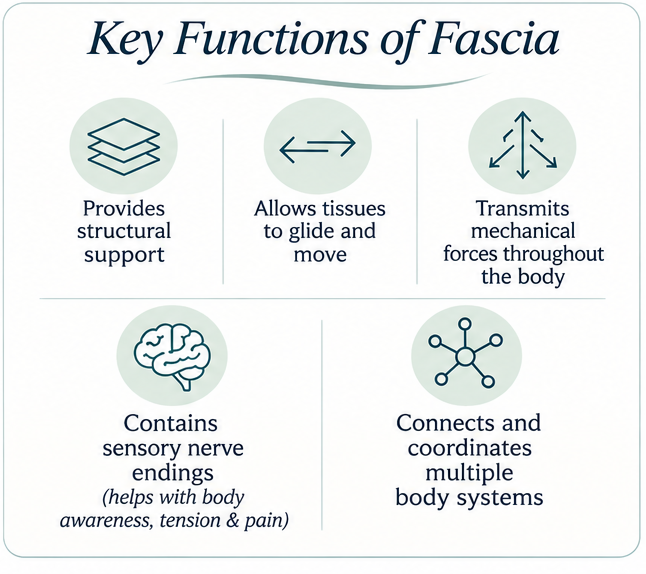
It provides structural support, allows tissues to glide against one another, transmits mechanical forces, and plays an important role in proprioception—our body's awareness of position and movement.
Fascia is rich in sensory nerve endings, making it an important component of how we perceive tension, pressure, and pain.
Healthy fascial tissue adapts to movement and mechanical demands. However, injury, surgery, repetitive strain, inflammation, and prolonged immobility can affect its mobility and sensitivity.
Because fascia connects and interacts with multiple anatomical structures, symptoms may involve more than the area where discomfort is initially felt.

What Is Fascial Therapy?
Fascial therapy, often referred to as myofascial release, is a hands-on manual therapy approach focused on assessing and treating restrictions within the body's connective tissues.
Using gentle sustained pressure, tissue engagement, stretching, and specific manual techniques, your therapist works with areas of tension and reduced mobility.
Unlike techniques focused exclusively on individual muscles, fascial therapy considers the relationships between different tissues and regions of the body.
For example, restrictions around the chest and shoulder girdle may influence how comfortably the neck and upper extremities move. Similarly, tissue changes around the abdomen, pelvis, and hips may contribute to altered movement patterns.
Our goal is not simply to address the area of discomfort, but to understand the broader mechanical relationships that may be contributing to it.
When Can Fascial Therapy Be Beneficial?
Fascial therapy may be incorporated into treatment for a variety of musculoskeletal concerns, including:
Chronic neck and shoulder tension: Improving tissue mobility around the cervical spine, upper trapezius, pectoral region, and shoulder girdle.
Headaches and TMJ dysfunction: Addressing muscular and fascial tension surrounding the jaw, face, neck, and suboccipital region.
Thoracic outlet symptoms: Working with the soft tissues surrounding the neck, upper chest, ribs, and shoulder girdle as part of a comprehensive treatment approach.
Lower back and hip discomfort: Improving soft-tissue mobility and addressing movement restrictions involving the lumbar spine, pelvis, and hips.
Post-surgical scar tissue: Supporting the mobility and comfort of healed tissues following surgical procedures.
Postural and movement restrictions: Addressing areas of stiffness that may interfere with comfortable, coordinated movement.
Sports-related overuse and recovery: Supporting flexibility, mobility, and comfortable return to physical activity.
Abdominal and pelvic restrictions: Working with connective tissue surrounding the abdomen and pelvis, sometimes alongside visceral manipulation.
Understanding Fascial Connections Throughout the Body
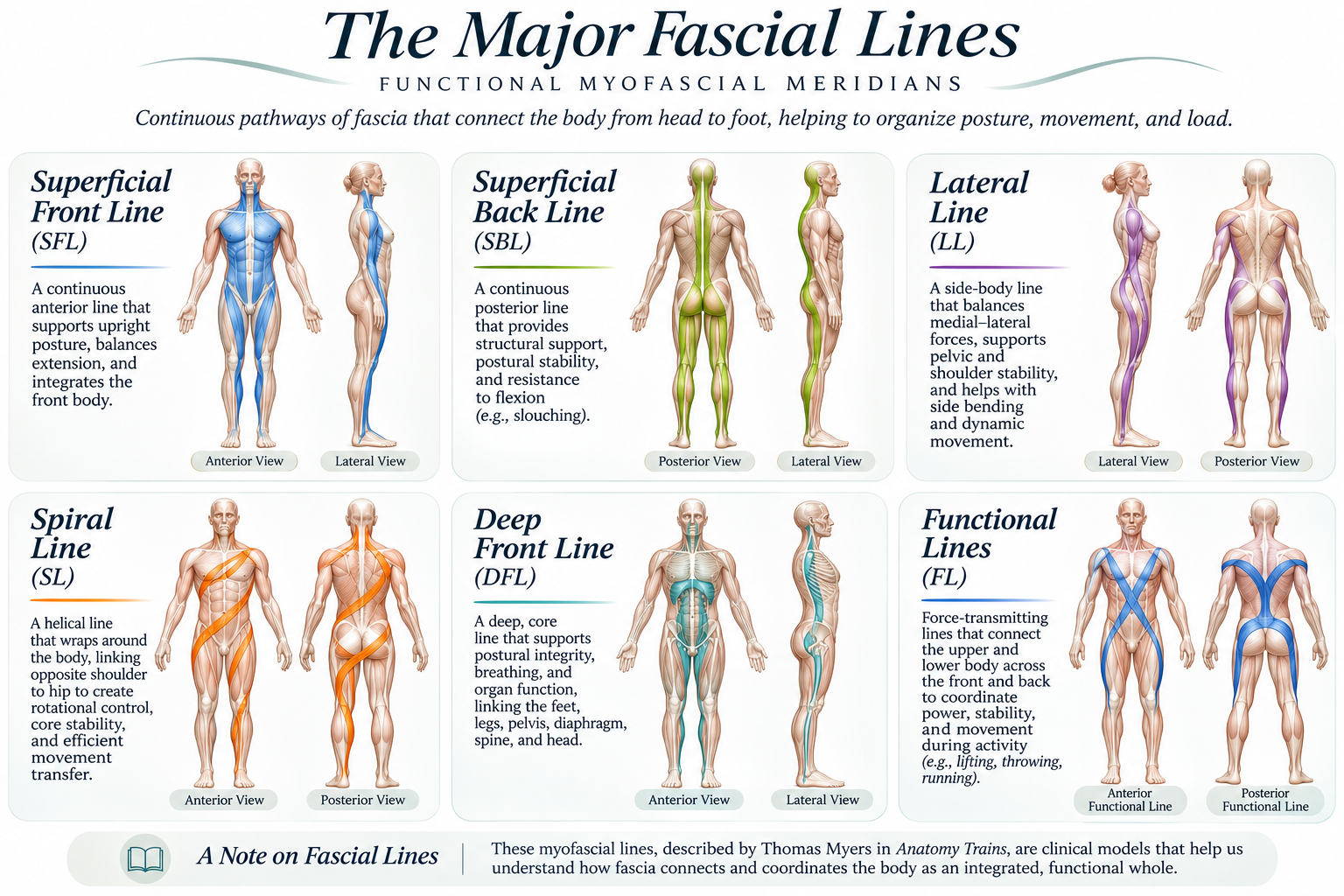
One of the central principles of osteopathic care is that the body functions as an interconnected unit.
The fascia of the foot, leg, pelvis, trunk, and neck forms part of a continuous connective tissue system. Mechanical forces are distributed across these tissues during movement.
This does not mean every painful area originates somewhere else. Rather, it highlights why examining surrounding structures and movement patterns can be valuable when symptoms persist.
For instance, someone experiencing recurring neck tension may also demonstrate reduced thoracic mobility, restricted shoulder movement, or altered breathing mechanics.
By evaluating these relationships, we can develop a more comprehensive treatment strategy.
Our Approach at Avalon Wellness & Performance
At Avalon, fascial therapy is rarely viewed as an isolated technique. Instead, it is incorporated into a broader osteopathic assessment and individualized treatment plan.
Depending on your needs, your session may include:
Myofascial release and sustained fascial engagement
Osteopathic soft-tissue mobilization
Joint and movement assessment
Neuromuscular techniques
Breathing and mobility exercises
Our treatment approach considers your symptoms, medical history, movement patterns, and how your body responds to hands-on care.
Some techniques are gentle and sustained, while others involve more direct tissue engagement or active movement.
Treatment is adapted to your comfort, goals, and individual presentation.
What to Expect During a Fascial Therapy Session
Your therapist begins by discussing your concerns and assessing relevant movement patterns and areas of tissue restriction.
During treatment, you may experience sustained pressure, gentle stretching, or subtle movements as your therapist works with the connective tissues.
Some clients notice an immediate improvement in comfort or range of motion, while others experience more gradual changes over several sessions.
Your therapist may also recommend simple mobility exercises or breathing techniques to help maintain improvements between appointments.
Experience a Whole-Body Approach to Manual Therapy
At Avalon Wellness & Performance in North Naples, we believe effective manual therapy begins with understanding how the body's structures work together.
Whether you are experiencing chronic tension, recovering from an injury, or looking to improve mobility and physical performance, fascial therapy may be a valuable component of your individualized treatment.
Restore mobility. Reduce tension. Move with greater ease.